Cameron University adds food pantry to address effects of national food insecurity on campus
Last Week, Cameron University announced the opening of their Aggie Closet and Cupboard, which serves as a resource for students to obtain food, clothes, and hygiene products. This addition provides a direct response to the growing rate of food insecurity in Oklahoma.

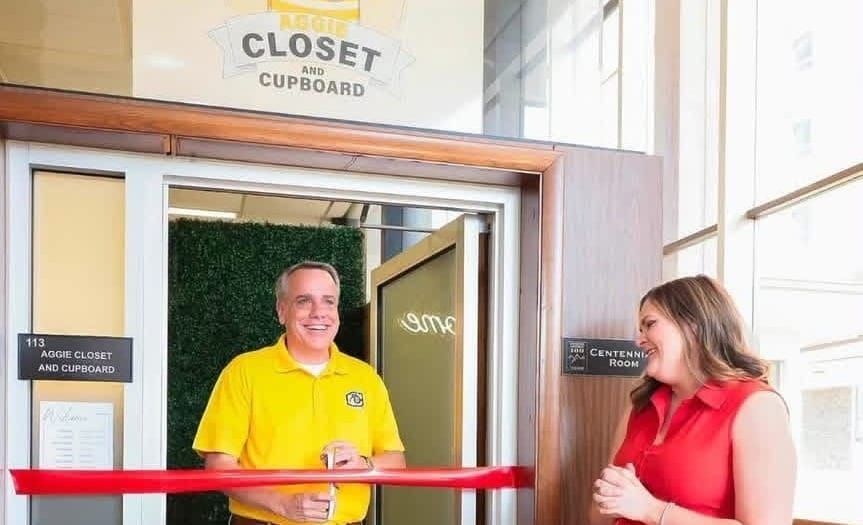
Last Week, Cameron University announced the opening of their Aggie Closet and Cupboard, which serves as a resource for students to obtain food, clothes, and hygiene products. This addition provides a direct response to the growing rate of food insecurity in Oklahoma, which heavily impacts college students.
According to the USDA, 47.9 million people in the U.S. experience food insecurity. The U.S. Government Accountability Office notes that 3.8 million of those people are college students, with 23% of all college students in the country facing food insecurity. In Oklahoma, specifically, the State Department of Health lists more than 15% of Oklahoma households struggling with food insecurity and 35-50% of college students in Oklahoma lacking adequate, nutritional meals.
The national level of food insecurity due to cuts to assistance programs and price inflation doesn't end when a student moves away from home; they embark on their own with that same burden. Even students that didn't experience food shortages at home are subject to struggling with it in college as a result of the economic state of the country and minimal resources. Food insecurity among students can have a detrimental impact on their overall health and development, but also on their performance in class.
To address the impact of food insecurity, several nearby schools began providing food pantries where students can stop by and get food items for free to ensure they're getting some level of nutrition. These schools include MSU in Wichita Falls, SWOSU in Weatherford, USAO in Chickasha, Western Oklahoma State College in Altus, and now Cameron University. The growing need for student assistance in obtaining food has seemingly made campus pantries a vital trend across Texoma.
While Cameron offered a clothes closet for several years, the addition of a pantry to supply food came through a partnership with the Lawton Food Bank. This partnership not only addresses food insecurity on campus, but it also demonstrates the collaborative efforts that make a community function effectively to address concerns that impact the whole city.
Francesca Morris, the Financial and Community Resource Specialist at Cameron, said before that the campus could only offer blessing boxes and access to information about local resources. While she said the Student Enrichment Center was able to assist students with information about financial aid, financial wellness, housing and transportation resources, food access, academic coaching, and other community resources, it sometimes couldn't directly provide the help.
Morris explained that between spring 2024 and spring 2026, their case management services worked with more than 250 students. That included helping with food access, which she said made up nearly 30% of the needs they helped to address.
"One of the things that became clear to me was that connecting a student to a resource is only part of the solution. We also have to think about whether they can realistically access it," Morris said. "Having a food pantry on campus removes many of those barriers. A student can stop by between classes and get what they need in a place they are already going to be."
Kaleigh Hooper, the Dean of Students Coordinator, said that the most utilized of the resources available to students was the Food Bank. However, she said for students to access their monthly allotment of food through the food bank, they had to be able to pick it up or arrange for someone on campus to pick it up for them. Along with transportation concerns, some students weren't able to make the Food Bank hours work with their schedules.
Hooper noted that food insecurity is a direct symptom of financial hardship. She said 80% of CU students receive financial assistance of some sort
Morris said when she began her position with the Student Enrichment Center when it was established in 2020 by a U.S. Department of Education Title III Strengthening Institutions Grant, she focused on identifying student needs. By listening to students share their struggles and identifying patterns across the campus, she determined that the greatest issue students faced was access to food.
"I was working with a student who was experiencing both housing and food insecurity. The student took a piece of candy from the candy bowl in our waiting area and mentioned that it was the first thing they had eaten all day. It was already late in the afternoon." Morris said. "I already knew food insecurity was a concern for some of our students, but that moment made the issue very tangible. When a student sitting right in front of you has made it through most of their day without eating, you start thinking differently about what access really means and how quickly we need to be able to respond."
Through Morris's efforts to document the need for an on-site food resource for students, several people were able to come together to make it happen. Morris said this included Professor Cory Cart and students in his Communications class, Director of Events & Activities Alannah Myers-Young, Student Government Association President Connor Holt, university leadership, and Executive Director Alex Minter-McCann at the Lawton Food Bank.
Hooper added that Dr. Leslie Cothren, the Dean of Students, has sat on the Lawton Food Bank Board for several years and has worked with McCann to bring the cupboard to campus. It took some time to determine where the pantry would go, how it would be run, and which office would run it, but once that was sorted out, they actively worked toward implementing their plan. She said the end result was the pantry being added to the campus closet and the Dean of Students office taking ownership of it.
"The Aggie Closet and Cupboard solely runs off donations, and to get the amount of food donated that the food bank can provide is not feasible. The partnership is crucial to us being able to meet this need that we otherwise wouldn’t be able to," Hooper said.
Hooper mentioned that the Aggie Closet and Cupboard is not just intended to provide students with food during classes, but also during breaks. She said for students who live on campus during breaks rather than go home, such as international students, the cupboard provides them with food for that time. They are able to collect enough food for the break before campus closes so that they can get by until classes start back up.
The Aggie Closet and Cupboard is located in Shepler Center, room 113. The site provides the food pantry stocked by the Lawton Food Bank, professional attire, hygiene items, and school supplies. Hooper said the current hours will be Monday through Wednesday from 12-2 p.m. and Thursday from 9-11:30 a.m. Food collection will be available during those hours, but Hooper said students can schedule individual appointments if need be, on a case-by-case basis.
"Food insecurity is not obvious. Many people struggle with food insecurity and there isn’t 'one look' to determine someone’s need. It takes having a conversation and determining that there is a need beyond what is showing at surface level," Hooper said.
Morris said the Food Bank is also collecting community donations specifically to help stock the Aggie Cupboard & Closet. She added that this gives people in the Lawton community a direct way to support Cameron students. Donations can be made through the Food Bank's website.
"It really became a collaborative campus and community effort, which I think is one of the best things about the project," Morris said. "The Aggie Cupboard & Closet is a great example of what can happen when we identify a barrier, bring the right people together, and find a solution that makes it a little easier for students to stay focused on their education."
Morris shared that she believes one of the most important factors in helping students is making sure they know about the resources available to them, before they find themselves needing them. She also expressed her hope to continue finding new, more direct ways to address the student needs she encounters on campus. She listed examples such as helping with housing deposits and providing more flexible transportation. The Aggie Closet and Cupboard serves as a beacon of hope that providing that assistance is possible.
"I hope the Aggie Cupboard and Closet helps take one of those worries off a student's plate. If having food, clothing, hygiene products, or household necessities readily available on campus gives a student more time and energy to focus on class, stay enrolled, and keep moving toward their degree, then it is accomplishing exactly what we hoped it would," Morris said.