Industrial concerns shift as data center discussion hits Southwest Oklahoma
Data centers have been “booming” throughout Oklahoma and that conversation has made it’s way to the Southwest area, specifically in Lawton’s most recent city council meeting.

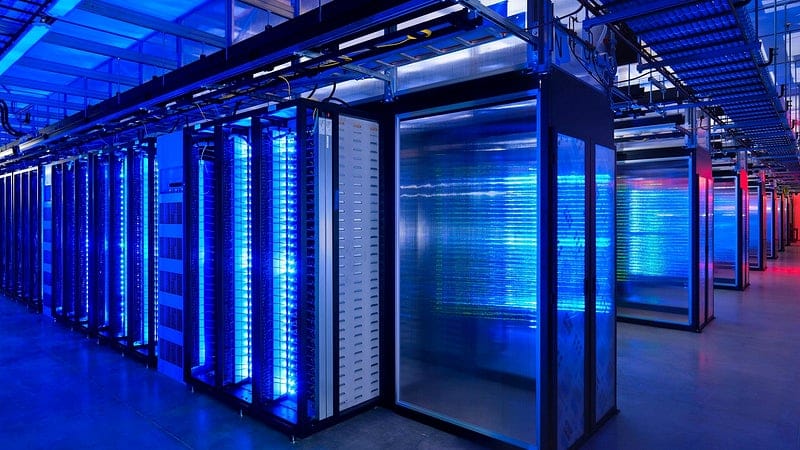
Data centers have become an increasingly rampant discussion topic throughout Oklahoma, more so in the Oklahoma City and Tulsa areas. According to datacentermap.com, there are approximately 37 data centers in Oklahoma. These centers have caused divides in communities considering the option. Some of the pros associated with this industry include massive economic investment due to the sheer number of dollars that are needed to construct the centers and job creation. However, when listening to community members speak, like at the February 24 Lawton City Council meeting, the cons far outweigh the benefits.
During said meeting, the council discussed what the zoning requirements would be to allow data centers within city limits. The item was accompanied with tense emotions, having council members question state statute and community members question whether government had their best interest in mind. The item had been tabled previously and was brought back as “the most restrictive we can be and still comply with state law”, according to Mayor Stan Booker.
The ordinance council discussed and ultimately approved was to draw a line at data centers with an electrical demand of 2 megawatts. Those below the line would be permitted within an I-1 Restricted Manufacturing zone and those requiring more than 2 megawatts would be subject to “use permitted on review” for subsequent zones. This was the suggestion from city officials as the original proposed ordinance drew the line at 5 megawatts.
The item itself was meant to be a public hearing to hear citizen concerns before making a decision on the ordinance. To citizens’ surprise, the allotted time was equivalent to regular audience participation per topic— nine minutes. Within Lawton city code, a person is supposed to be granted 3 minutes of time to make their voice heard. However, with the six individuals who signed up to speak, Booker made the decision to give each speaker two minutes instead.
In short, every community member who spoke made it clear to the council that they were not in support of allowing a data center within the city. Dark Roast spoke with one of the citizens who spoke, Jesse Stroup Sr. afterward to get his perspective on the council’s decision.
“We were only limited to two minutes to speak on a massive infrastructure decision,” Stroup stated. “Them giving us our two minutes was just a formality to them.”
Stroup had only moved to the City of Lawton five months prior and stated he never really inserted himself into local politics until this topic was brought to his attention. From his relatively short time living in the city one of the things he instantly appreciated was Lawton’s surrounding natural environments, especially the Wichita Mountains. To him, bringing in data centers will only destroy that natural environment that he says makes Lawton unique.
”I may have only been here for five months, but I plan on raising my children here,” Stroup said. “Imagine your grandchildren asking you why these mountains look like forgotten warehouses. That’s a heartbreak we’re inviting.”
Richard Rogalski, the Executive Director of the Lawton Economic Development Authority (LEDA) and the Project and Operations Consultant for the Lawton Economic Development Corporation (LEDC), was one of the main presenters during the council meeting on the topic. According to Rogalski, the City of Lawton’s zoning codes didn’t have any restrictions on data centers and their energy usage. The only code officials said put any limit was back when the city allowed data mining centers, and that was allowing anything over 1 megawatt. Having the 1 megawatt difference before requiring review fell in line with state statute, according to Rogalski.
Journalism like this is only possible through the support we receive. Consider making a small donation to help us pursue accountability.
Use permitted on review
The biggest point of contention during the council meeting was whether the decision could be made to have every data center be permitted on review, getting rid of the threshold. Essentially “use permitted on review” makes everything a case by case scenario no matter the megawatt usage. It would require two public hearings, one in front of the City Planning Commission and the other in front of city council. Additionally, it would subject the company to a binding site agreement, meaning any change that they want to make would require them to go back through the entire process.
Multiple council members, to include Ward 2 Councilman Taron Epps, Ward 3 Councilman Kirby Brown and Ward 5 Councilman Allan Hampton all considered the idea of suggesting the ordinance be changed to everything being “use permitted on review”.
However, Rogalski stated that this was how restrictive the city felt comfortable going when compared to state statute. During the questioning, council members tried clarifying multiple times whether they would be breaking state law by requiring all data centers go through a use permitted on review process.
“My intuition leads me to believe no. There’s not been a denial, there’s been a process,” Epps said, explaining his thought process on the topic.
In response, Rogalski said they could make whatever decision they wanted to, but he wouldn’t recommend leaving everything up to review. He explained that if there was any appearance of discrimination on businesses from the city then it could open the possibility of a lawsuit.
“The citizens want a voice in any data center that comes here,” Hampton stated.
Lawton City Manager John Ratliff suggested the idea of reaching out to the Oklahoma Attorney General’s office to get an opinion on whether they would be breaking state statute with having everything under review.
The council’s decision and looking ahead
Ultimately, as previously stated the council voted to go with the suggested ordinance from city staff. When asked, Stroup said that he wasn’t surprised at the decision from what he has seen and heard about the council since moving and that there’s no telling who is talking behind closed doors. He also thinks that data centers will come to the city no matter what despite multiple council members being against the idea just like every citizen who spoke during the public hearing.
Currently, there are multiple bills in the legislature dealing with data centers, one goes as far as implementing a moratorium on the industry (Senate Bill 1488), filed by District 43 Senator Kendal Sacchieri. However, this moratorium would only apply to large-scale data centers (100 megawatts and above).
“As data centers continue to grow rapidly across Oklahoma, we are confronting serious unknowns about how these large facilities affect our communities, our utilities, and our natural resources,” Sen. Sacchieri said in a press release. “This bill stems from those unknowns, and there are real, serious concerns around what these data centers will bring to our state negatively.”
With that said, there is a chance that ordinances will have to change no matter what depending on the outcome of this year's legislative session. One thing that many of the public speakers all made a point to say during their two minutes was to do your own research.
”I’m not anti-technology. I’m pro-responsibility,” Stroup said. “If you’re a true citizen of Lawton, you should want to keep it beautiful.”