‘The risk is on us’: License plate readers spark debate of constitutionality among Lawton community
Those who are concerned share the belief that these cameras infringe upon a person’s Fourth Amendment rights, as these cameras are capturing information 24/7.

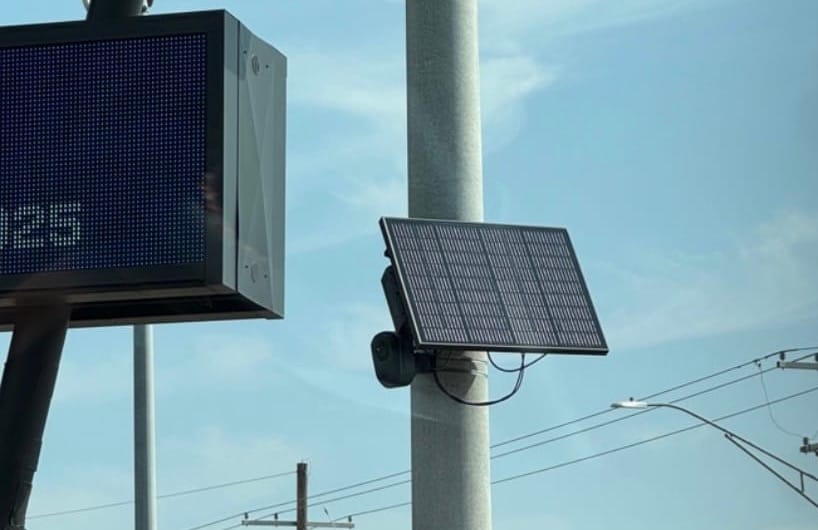
The feeling of constantly being surveilled— that’s what many people in Lawton are working to get rid of. This feeling comes from automatic license plate readers (ALPR) that have been installed around the city. These cameras are bought from Flock Safety, a company that specializes in providing surveillance cameras and data storage.
In simple terms, these ALPR’s capture photos of every car that passes through them, storing the data in a cloud system. Whichever entity has access to this system, whether it be a police department or other agency, can search through the data and find vehicles reportedly using details as minute as a bumper sticker.
Those who are concerned share the belief that these cameras infringe upon a person’s Fourth Amendment rights, as these cameras are capturing information 24/7. The City of Lawton first started touting these cameras after the 2040 CIP was approved. While the Lawton Police Department (LPD) had a few already installed, this allowed the department to increase that number.
During the time they've installed these cameras, officials with the department have gone in front of the council to praise their ability to help solve crimes. These presentations led city council members to ask for cameras to place in their wards. While cars throughout the city have been monitored by these cameras, the concern from the community has begun to ramp up.
Dark Roast spoke with multiple community members, to include Branden Thomas, a citizen in Ward 3. Thomas has a background in tech and when he learned about the flock cameras set up around town, not being familiar with them, he reached out to city council. His original letter was sent back in September of 2025.
“The idea of being tracked by our government is the most invasive thing,” Thomas said.
In his letter, Thomas asked questions about the legal uses under Oklahoma statute and what safeguards are in place to prevent misuse. After a month of getting no response, he sent a follow up, this time addressing the letter as a formal open records request. When he got his response, he felt it was less than satisfactory.
“There is so much opportunity for misuse and abuse with a system like this and the risk is on us,” Thomas stated.
Larry Cotton, another person Dark Roast spoke with, is taking a more active approach in trying to find some resolution. Cotton shares the same concerns as Thomas and many others. In an effort to try and make change, Cotton reached out to newly elected Councilwoman Tiffiney Dimery. Cotton doesn’t believe the current council is trustworthy and hopes a new set of eyes on the dais will be what it takes to make some changes.
“Too many in the city council are just rubber stamps,” Cotton said.
Dark Roast reached out to Dimery and while she did say people have spoken to her about this issue, she also said it’s too early to comment as she looks into it.
Dark Roast staff also submitted an open records request with the Lawton Police Department. Our request asked for things like how many cameras have been purchase and what entities have access to that information. According to the records we received, the Lawton Police Department has spent $114,000 on cameras alone, with additional charges for the system itself.
For more information about how LPD uses these cameras, Dark Roast reached out to department officials, but they declined to comment.
Flock Safety does have a transparency portal for its customers. You can look at the Lawton Police Department’s information here. The website page, that was last updated on January 3 as of the writing of this article, shows that LPD only has 28 cameras and has captured over 160,000 vehicles in the last 30 days. However, according to the records Dark Roast received, the City of Lawton has 38 cameras.
“It’s how the system could be misused,” Thomas said. “Even the stuff they disclose, that it’s meant to be used for, the intended use is also scary.”
The ALPR discussions really kicked off amongst Oklahoma lawmakers back in October of 2024, specifically by House Representative Tom Gann. During that time, the City of Lawton had already installed 15 of these cameras. One of Gann’s first points was evidence gathered by the camera that was thrown out of a case due to it being “illegally obtained”.
Currently, most of the regulations around the use of ALPRs are centered around Oklahoma’s Compulsory Insurance Law. According to Gann, the cameras don’t need to be taken down, but highly regulated.
"It is not necessary, nor is it acceptable to put a camera on every street corner," Gann said back in 2024. "We must have constitutional protections in place."
At the start of 2025, Gann expressed more concern in January of 2025 after he said he discovered the Flock system was sharing the City of Guthrie’s information with nearly 100 other government agencies.
"When city councils approve these systems, they often believe they are simply authorizing a tool to compare passing traffic with National Crime Information Center (NCIC) and Amber Alert lists," Gann said. "But what they do not realize is they have just made their town the latest node on a growing surveillance network and have authorized their police departments to share their citizens' travel data with numerous other government agencies. When abuses occur, citizens have little recourse to address their grievances with agencies located far away, where they do not have standing as voters."
During the regular session of the 60th legislature, not much legislation was proposed for implementing ALRP regulations. Senator Darrell Weaver drafted Senate Bill 857. SB 857 proposed the recommended regulations and oversight Gann was pushing for the previous year. These guidelines would include things like keeping an access log and having the rules be set by the Department of Transportation, This bill would have opened up the use of ALPRs, essentially taking their use out of question of their legality. However, this bill didn’t make it far.
In response to growing concerns with no additional regulations, Gann held another interim study over the subject in October of 2025. Gann and other officials who presented during this study reaffirmed the idea that these types of cameras and their uses are infringing on people’s fourth amendment rights. Toward the end of the study, officials suggested also implementing a law that would detail consequences for those who use these systems in a way that violates the law.
Although lawmakers are working to make alterations on the legal side of things and provide regulations, many people in the community, such as Cotton and Branden feel like these systems shouldn’t be in place at all.
“If it can be used nefariously, it will be,” Cotton said.
The controversy surrounding these cameras and this company spans far beyond just Oklahoma. Many communities in a plethora of states have expressed the same concerns. Municipalities are cutting their contracts with Flock left and right after the members of the community have made their voices heard and their representation listened.
“It should be up to the court of public opinion,” Thomas stated.
Journalism like this is only possible with the support of our readers. Give a donation or subscribe to help continue Dark Roast’s mission.