Community members call for changes to Lawton’s D&D process, claiming double standard
Recent conversations around Lawton's unhoused population and inflation have resulted in several Lawton residents reflecting on the city's D&D process and how it impacts such issues and whether the city is held to the same standards.

The City of Lawton’s Dilapidated and Dangerous (D&D) Structures process has been a concern for low income home owners for a while now. In 2025, Mayor Stan Booker made an attempt to expedite the process of addressing structures the city believed to violate codes by holding a D&D meeting twice a month. Mayor Booker has claimed he felt inclined to address such buildings in town to make the city safer for children. The increased rate at which these properties were being targeted contributed to the dump needing to be expanded to accommodate the debris from demolitions, and several elderly or low income people losing their homes.
With the recent concern around the city doing away with the tent city, Lawton’s only low barrier shelter for unhoused community members, some residents are pointing to the D&D process as a contributor to the homeless issue. Dark Roast reached out to members of the community to get insight on how the process has impacted people’s lives. This led to some residents sharing outcomes that involved losing ancestral homes and becoming homeless.
“They’re hitting anybody and everybody, but mainly the working lower class. I pray for them to finally get a conscience for the real people in the world,” Linda Suson said.
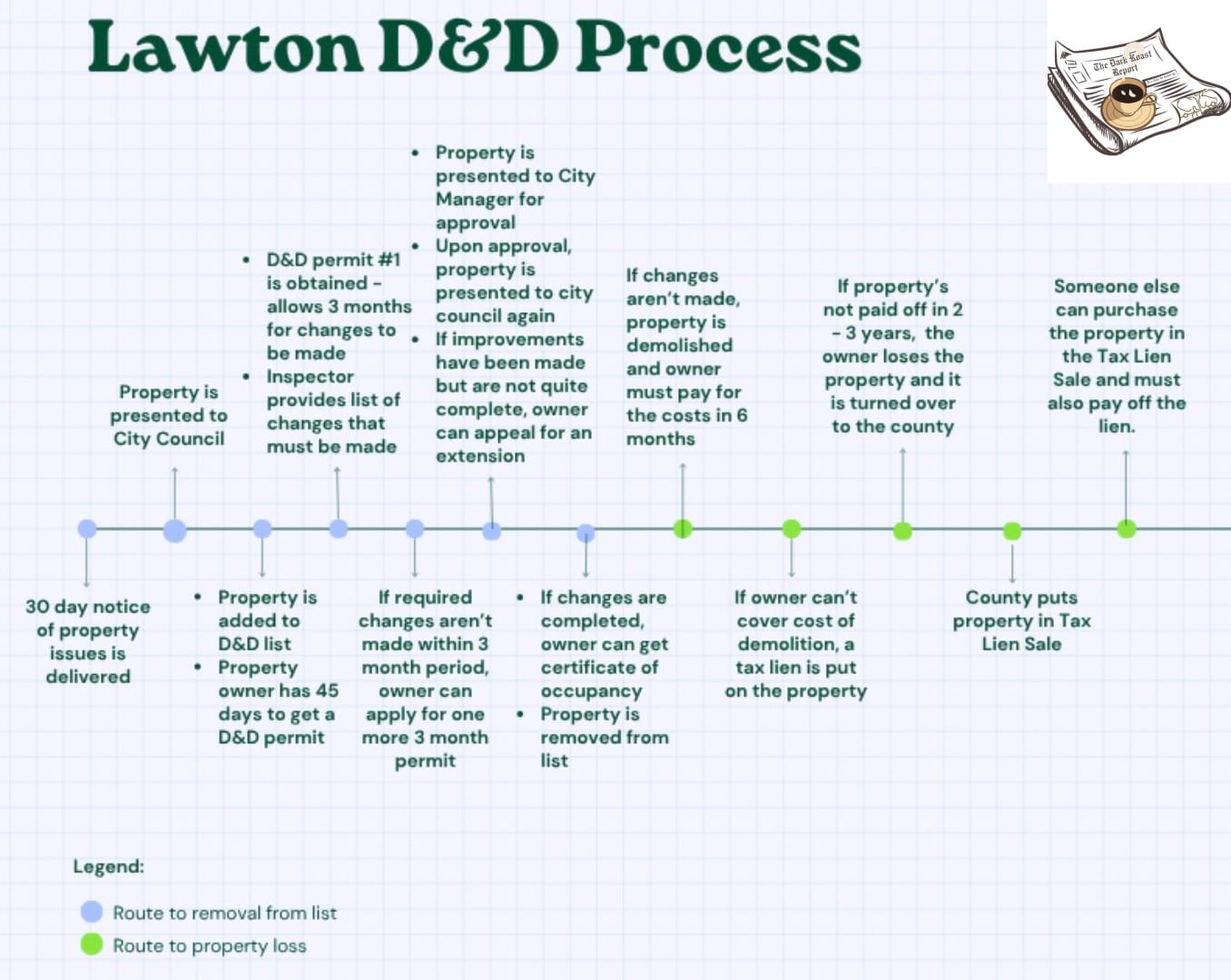
The D&D process in Lawton follows particular steps and timelines, some which property owners take issue with. The process involves notices, obtaining permits, and strict timelines. A detailed timeline of the process based on information from city officials can be found below.
Antonio Hopson, the Safe and Clean Neighborhood Services Deputy Director, and Jonathan Jernigan, the Supervisor of Safe and Clean Neighborhood Services said that while the city is back to evaluating D&D properties once a month, they’re still busy with the process.
“We’ve addressed the majority of the D and D structures in the town. That’s the reason we’re going back to one D and D meeting per month. Now, there will be D and Ds that we will see because there’s houses that get neglected by the property owners moving away or damages from just neglect itself, so there’s always going to be D and D structures in the City of Lawton,” Jernigan said.
Jernigan noted that they made one change to one of the timelines in the process, stating that they now send a 30 day notice to get a permit before the property is added to the D&D list. Once the owner receives a resolution letter, they have 45 days to get a D&D permit which is good for four months. From there, an inspector gives the property owner a list of the fixes that need to be made. He said an owner can get up to two of these permits.
“One of the changes of the timeline is, before it was just ‘hey, here’s a notice to go to council — you’ve gotta be at council at this time.’ Now, what we’re doing, we’ve changed up our process because we want to be informative and to teach more than just enforce and to get stuff torn down,” Jernigan said.
Project plans and some other resources must be obtained before work can begin. Jernigan said property owners have 180 days to make considerable progress, with permitting required. If the work’s not complete by then, the property can be presented to City Council again for the potential of an extension.
“The end game here is not to punish the citizens, it’s to get the properties back into livable conditions,” Hopson said.
One Lawton resident said she’s been at risk of losing her property to the process for around two years. Linda Suson is a full time nurse and has a disabled husband, so she purchased a small property on the other side of town to downsize in the future. In the meantime, she had a friend staying on the property, until the city got involved.
She said her issues began when a shed on the property caught fire. While she cleaned the mess, the structure remained. Suson said she wasn’t even aware of the city’s issue with the structure until she received a bill for the demolition process, because she didn’t receive the notice. Suson said the bill blindsided her and was the beginning of her financial strain.
Suson said that since then, the city has cited her for various things on the property, including tall grass and a pile of tires. She said that each time she pays off one thing, a new cost appears. She explained that she’s doing her best to address the issues and pay off the costs but it’s a lot for one person. She said she has one bill left to pay off and is hoping that’s the end of it.
Suson said her plan has always been to slowly work on the inside of the house to make it what she wants but she hasn’t been able to afford to do that while making payments to the city, just to hold on to the property. Suson explained she is doing her best and is frustrated because she feels that the city is just trying to scrape together funds because they’ve invested so much into FISTA and new attractions.
“If I could quit paying them, I could get things done,” Suson said. “Every time I save up money, I’ve gotta pay another fine, but they haven’t lifted a finger to do anything.”
Additionally, Suson said she's frustrated that she’s expected to struggle to maintain her house when there are city owned lots that aren’t maintained. She mentioned a lot near her house that she’s complained about multiple times and said nothing’s changed. She also mentioned concerning old structures in nicer parts of town and wonders why they aren’t being addressed. She admitted that she feels the process is intended to target the poor and that she feels the city lacks compassion.
Suson said her biggest complaint about the process is the poor communication. She explained that she wishes they would mail every notice and ensure that property owners received them to give people a chance to try to gather resources. She also wishes residents had more of an opportunity to share their circumstances, beyond the few minutes they’re allowed to speak before city council. She said anytime she tried to speak to someone about her concerns, she just got passed off to someone else and nothing was accomplished. She said she knows the process isn’t going away, she just hopes changes will be made to it to give people a fighting chance to keep their homes and not financially drown in the process.
“They don’t listen. They don’t talk to you. They just send you notices and tell you they want more money,” Suson said.
Jernigan noted that in Oklahoma, all livable structures must have a heat source and running water. He added that, while the city doesn’t offer direct resources to assist low income, disabled, or elderly property owners, if there’s a water account they can point the owner toward external resources for help, such as Habitat for Humanity.
However, for those struggling to keep up with water bills, or those who don’t qualify for grants, this doesn’t provide much help. For individuals that have no resources of their own or who can’t obtain the help or resources, their hands are often tied. Unfortunately, these instances commonly result in people losing their homes, and for those who are poor and without support systems, this can lead to them having nowhere to go.
“If there is a water account, we actually refer those individuals to our housing division so they can see if they qualify for any grants to get their houses remodeled and back up. If it doesn’t have a water account and we’ve sent notice to the property owner, and nothing’s done to it…. We do not cause homelessness.”
It should be noted that up to this point, homelessness had not been inquired about in the interview. In response, Dark Roast leaned into Jernigan’s comment for clarification on the D&D process’s role in people losing their homes, since some residents have, in fact, claimed that the process resulted in them being homeless.
“At this moment, we really can’t answer that question because we’re really not sure at this point. Once it gets to the county, we’re really not sure what happens at that point,” Hopson responded.
The city is done with their obligations to communicate with the original property owner once the county takes over the property. The only part of the process that the county manages is the sale of the property. Every other step is governed by the city. Further, Jernigan stated that the city is not fully done with a D&D property until they have received the tax lien payment through the county.
While the optimistic outcomes for low income property owners on the list aren’t impossible, they generally require additional support. Gary Lee was one of the individuals that volunteered to help Charlie, one of the property owners that was at high risk of losing his property to the D&D process a couple months ago. Lee said he didn’t know Charlie before he began helping him but that he had seen Charlie plead his case to the city and be dismissed.
Lee, having also felt ignored by the city when he’s come to them with concerns in the past, related to Charlie’s frustration. He said he was aware of the D&D process at that point but hadn’t really looked into it. Upon hearing Charlie’s story, he looked into the situation more and saw how much progress Charlie had made and decided to step up and help. Lee reached out to Brenda Spencer Ragland, who has much experience with realty and assisting low income individuals with housing.
“Personally, I have my own battles with the city,” Lee said. “So it really rubs me the wrong way when I see stuff like that. They don’t even try to listen to the community members they claim to serve.”
With their help, Charlie was able to get the necessary resources, get an extension, and address the immediate concerns the city had with his home. Lee said Charlie still has work to do to keep his home off the D&D list but the property has undeniably improved. Unfortunately, not every low income person with a property on the list is lucky enough to have part of the community gather forces to aid them.
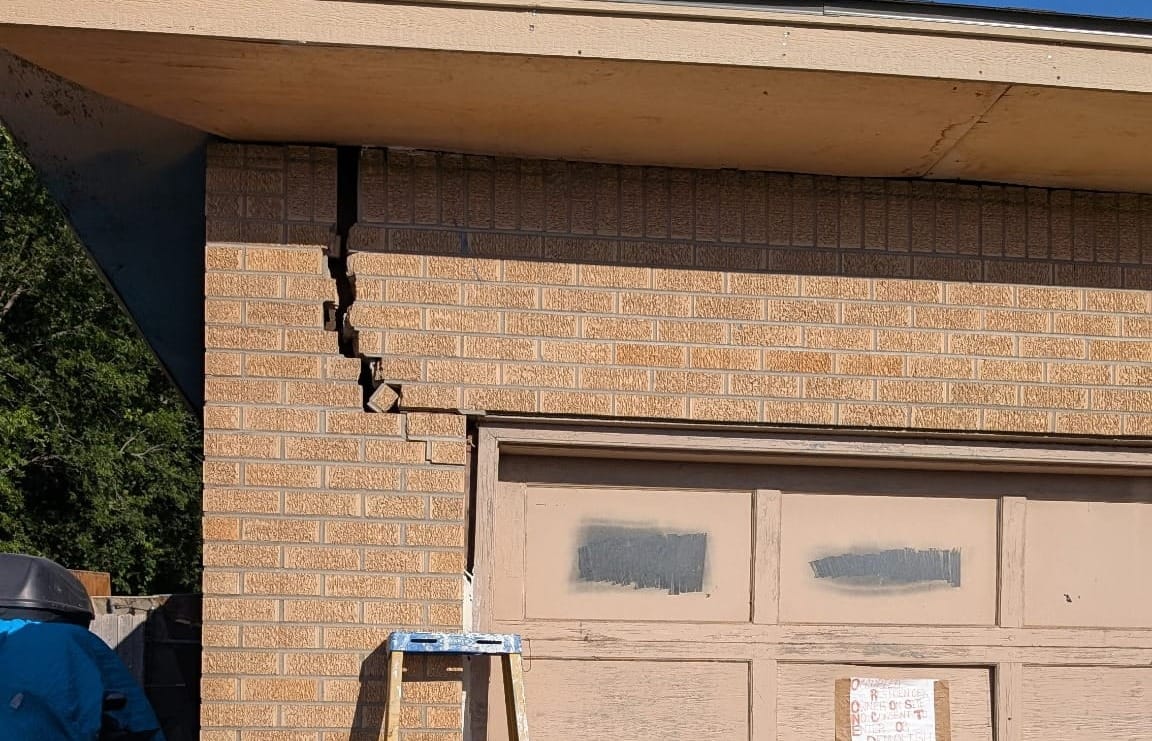
Lee also noted that throughout the process of fixing it up, nearly all the communication with the city was done through Spencer Ragland. While they’re all glad it worked out, Lee feels the issues with communication that got him involved in helping in the first place still were not addressed.
If they had not been successful in getting the property removed from the list, Lee fears Charlie would have wound up homeless. Lee explained that, while there are certainly some structures so far gone that they need to be demolished, he believes the process ultimately feeds the poverty issue and contributes to the number of unhoused people in Lawton.
“I do, overall, think there’s some benefit to the process, but whether or not they’re focusing on residences they shouldn’t be, versus business structures — because that, to me, devalues the city’s image more. There are houses that need to be torn down. There are people that literally do nothing and you have to address that somehow, but I think that starts being a mental health issue at some point,” Lee said.
To address the number of people at risk of losing their housing to the process, Lee shared that he plans to start a group that provides information and resources to those in need of help saving their properties. He said his experience helping Charlie made him realize how much the city is spending on the process and the lack of transparency around it. He said he feels that the expectations and guidelines of the process are not clear enough to the public for the average person to understand and know how to respond.
His plan is to create an outline that explains the process clearly and walks people through how to respond. Ultimately, he hopes to contribute to reform and help alter the standards people are held to so it’s a more realistic thing for low income people to achieve. While Lee doesn’t have a timeline for his plan, he encourages those who want to get involved or that need help to reach out to him via Facebook.
Lee also pointed out structures around town that don’t seem to be considered by the city’s D&D process, including city structures and abandoned school buildings owned by Lawton Public Schools. He used a deteriorating school building near Charlie’s house as an example. He feels that this reflects a double standard between the standards the city is held to and the timelines and expectations they have for residents.
“If you’re already struggling just to keep the lights on, then of course it’s gonna be hard to make those changes in the timeline the city would like. At the same time, you have to kind of start pointing out the things that they don’t address themselves and they’re not held accountable for,” Lee said.
Hopson stated that he believes the D&D process does result in safer and cleaner neighborhoods for children. However, some residents like Suson and Lee, have pointed out that the city owns several public properties, or buildings that aren’t fenced off and that appear to pose a greater risk to the safety of children than private residences do.
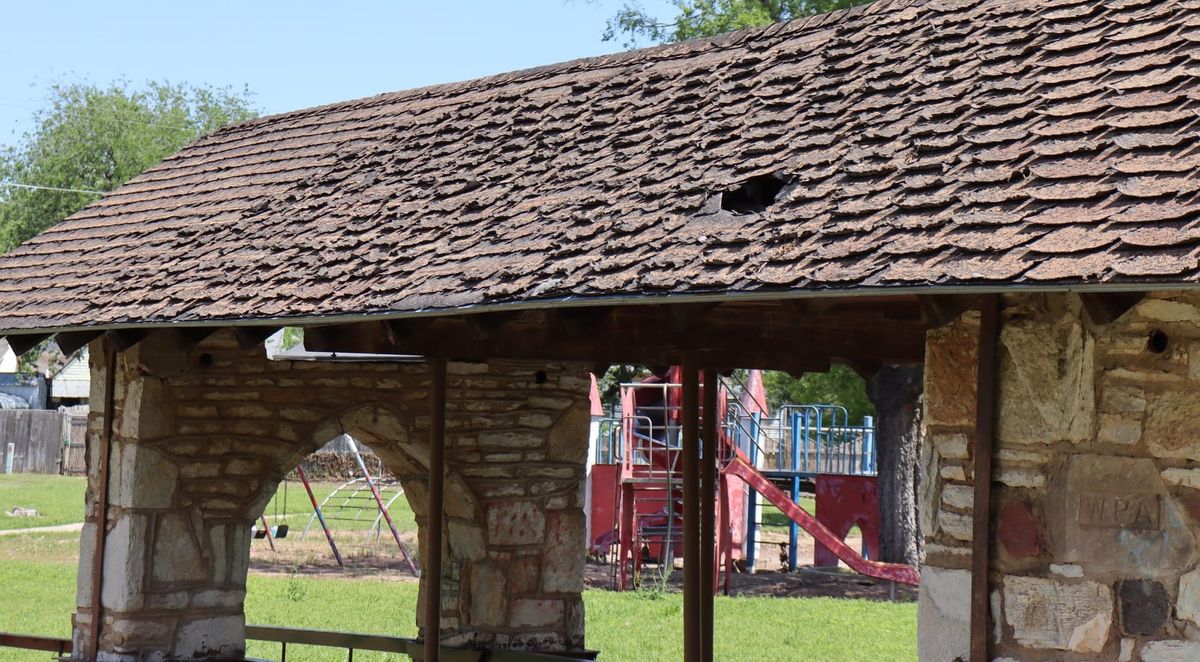
Some recent examples include upkeep of local parks. Hopson explained that the city has a staff member that visits all the parks in town weekly to inspect them for safety concerns. The Municipal Pool is a prime example, as it’s sat abandoned for a couple years now and commonly collects rain water which turns into stagnant, algae-filled still water after cooking in the sun for a few days. Under City Code, this is classified as a public nuisance and violates Article 15-3 about health concerns. Additionally, it violates Oklahoma Statutes 63-1-1022 which require unused public pools to be drained, chlorinated, or covered.

Hopson claims that the city immediately addresses issues with city owned structures when they’re brought to the attention of city officials. That said, when Dark Roast asked him to clarify the timeline for addressing the issues, he said that there’s a “schedule” to address concerns. He explained that there isn’t a set timeline for when an issue must be addressed and that it was dependent upon circumstances. Unlike with the standards the D&D process holds residents to, there isn’t a particular timeline for these projects and the burden of cost is a factor that can put it on hold.
“We schedule the work around here. We schedule all work and maintenance of anything that needs to be repaired. It depends on the level of damage, the level of work that has to be done, and, of course, the cost, so that all depends. All situations are different,” Hopson said.
Lee suggested that those who are at risk of losing their property to the D&D process need to have as much in writing as possible, including the list of changes expected to be made to the property. He said it’s important to keep a paper trail of all communications, costs, and changes made. He also suggests communicating with the council member of your ward and filing for the 30 day stay on demolition. These steps will provide some time to look for a solution.
For those who haven’t been impacted by the D&D process but want to help those who are, Lee suggests keeping up with the city’s monthly D&D meetings. He also recommends supporting Habitat for Humanity, and helping low income residents cover some of the costs of the process, such as permits. Lastly, he said showing up to help clean and repair these properties is a huge way to help out. Lee noted that this process impacts the whole community, though it may not be evident on the surface, and so he believes it’s going to take the community coming together to address it.