From 12 Cameras to Automated Drones: Inside Wichita Falls’ Growing Surveillance Ecosystem
A growing network of automated surveillance cameras has expanded across Wichita Falls, raising questions about the gap between what is documented in public records and the full scope of the city's surveillance capabilities.

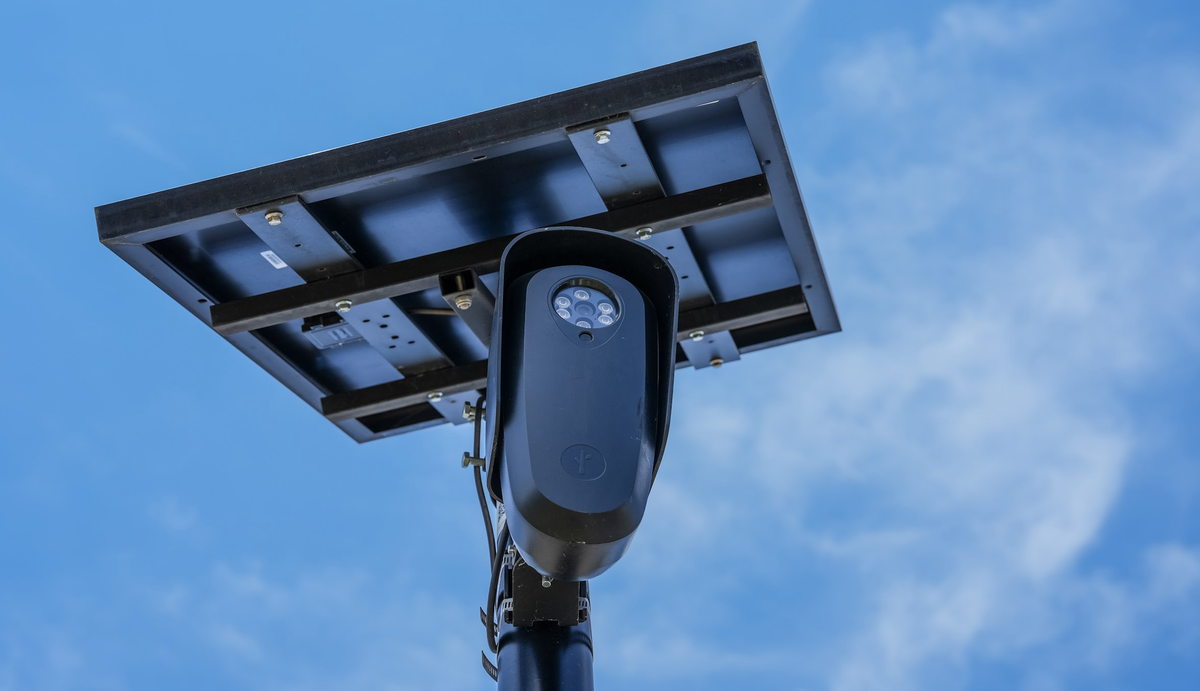
(Wichita Falls, TX) — A growing network of automated surveillance cameras has expanded across Wichita Falls, raising questions about the gap between what is documented in public records and the full scope of the city's surveillance capabilities.
Municipal records and state grant documents account for a specific inventory of police-purchased license plate readers. But independent mapping, government agreements and Flock Safety contracts indicate that the surveillance network may extend beyond those city-owned units.
According to city records obtained by Dark Roast Report, the Wichita Falls Police Department has steadily expanded its automated license plate reader program through targeted grants. In March 2023, the City Council passed Resolution No. 33-2023, authorizing the purchase of 12 Flock Safety cameras for $69,500 using a state Homeland Security grant.
The program expanded significantly the following year. Under Ordinance No. 32-2024, passed in August 2024, the city appropriated $114,417 from a Texas Motor Vehicle Crime Prevention Authority SB 224 Catalytic Converter Grant to purchase up to 36 additional Flock cameras. The department's 2024 Annual Report subsequently confirmed the addition of 30 new camera systems that year.
Official records may not capture the full surveillance network
Some Wichita Falls residents are growing increasingly skeptical of the scale of the city's surveillance network. One local resident, who asked to remain anonymous out of safety and privacy concerns, said: "There isn't a way out of town that you don't go by a Flock camera anymore. If I go and drive across town, I'm probably going to pass by at least four or five cameras going there and four or five cameras going back."
On the other side of the debate, proponents and law enforcement officials maintain that the camera network is a crucial tool for public safety. Supporters argue that automated license plate readers can help rapidly resolve auto thefts, locate missing children through AMBER Alerts and identify wanted suspects. From their perspective, the efficiency of automated license plate readers outweighs privacy concerns by giving police actionable leads that might otherwise take days or weeks of manual investigation to uncover.
However, the network may extend beyond these city-owned units. While crowdsourced sites have mapped more than 60 active cameras across the city, Dark Roast Report independently verified 48 active units through official city agreements. The full number of cameras operating within and around Wichita Falls is difficult to determine, in part because the city does not maintain a public transparency portal providing a comprehensive inventory of surveillance technology. As a result, official city records may not represent the full surveillance footprint available to or operating around Wichita Falls, particularly where cameras are owned or operated by other government entities or private organizations. That includes cameras potentially operating along state corridors such as Farm-to-Market Road 369 and county sheriff installations near Highway 79 exits.
The network also appears to extend beyond government-owned cameras. The resident, who personally mapped about 40 cameras, said the system includes private commercial cameras, citing Lowe's and Home Depot as examples. Separately, the city's master Government Agency Agreement with Flock Group Inc. states that the city desires access to the Flock Service to receive real-time notifications from private, non-agency cameras, including those owned by "schools, neighborhood homeowners associations, businesses and individual users."
That arrangement gives law enforcement a potential avenue to receive information and alerts from cameras outside the city's own inventory, expanding the potential reach of the surveillance system beyond equipment purchased directly by the Police Department.
The difficulty of determining the network's full scope is compounded by limited public access to location data. In response to a Texas Public Information Act request regarding the city's automated license plate readers, officials provided a web link to Flock Safety's internal network that required law enforcement login credentials, rendering the location data inaccessible to the public.
The Wichita Falls Police Department did not respond to multiple requests for comment.
Vehicle fingerprinting software logs vehicular attributes beyond plates
While public messaging often frames the technology as a tool for scanning license plates to deter auto theft and identify stolen vehicles, official contract documents reveal a more sophisticated tracking capability.
According to Section 1.30 of the Flock Government Agency Agreement, the system's proprietary "Vehicle Fingerprint" technology uses machine learning to identify and characterize vehicles based on attributes including vehicle type, make and color, as well as features such as bumper stickers, decals, roof racks and bike racks.
Flock's product policies describe the cameras as using passive infrared motion detection and machine learning to analyze vehicle characteristics, including in situations where a clear license plate reading may not be available.
For the anonymous resident, the technology goes too far.
"Don't let Flock tell you that it's just a license plate scanner," the resident said. "They look at bumper stickers, paint color, wheels—they build what they call a 'vehicle fingerprint.' The fact that a private company is being paid by my tax dollars from a public entity to do this is a Fourth Amendment overreach."
Drone integration poised to expand monitoring into the air
The surveillance network is poised to expand from the streets into the air. Contract documents signed by former Police Chief Manuel Borrego outline an agreement for the Flock Aerodome Drone as a First Responder 2.0 system.
The $150,000 program introduces the M4TD series drone, automated contact-charging "Dock 3" stations and integrated airspace radar. The system utilizes "Flock911 for Aerodome," a software integration that connects 911 calls with the FlockOS platform, allowing authorized personnel to dispatch the drone in response to active calls.
According to a mapping-site assessment presentation provided by Flock Safety to the Wichita Falls Police Department, municipal rooftops have been evaluated as potential sites for three "Dock 3" drone stations equipped with radar. The presentation identifies three potential launch locations: the City Bus Administration, the new police department headquarters and Fire Station No. 6 at 4912 Johnson Road. However, the assessment notes that the fire station site presents potential "distance and connectivity issues" because of an eastern treeline and a nearby water treatment plant and would require a custom rooftop access solution.
The resident remains wary of the rapid adoption.
"But that's not what this is. It's Flock integrated, AI integrated," the resident said. "I don't want this to start being used as additional surveillance to track people."
National web: More than 160 agencies linked to local network
As physical cameras multiply on local streets, the Wichita Falls Police Department is also connected to a nationwide digital surveillance network.
According to public records compiled by DeFlock, an independent surveillance tracking initiative, at least 162 law enforcement agencies publicly identify the Wichita Falls Police Department as a data-sharing recipient. The documented connections span police departments and sheriffs' offices in dozens of states, including agencies in California, New York, Ohio, Georgia and across Texas.
However, the full extent of this digital footprint remains difficult for local taxpayers to assess. Wichita Falls does not maintain an official public transparency portal for its Flock system. The 162 connections were identified as "inferred connections" through public portals maintained by outside agencies that identify the Wichita Falls Police Department as a data-sharing recipient.
These connections should therefore be understood as documented or inferred data-sharing relationships, rather than a definitive count of agencies actively sending searches, alerts or other information to Wichita Falls.
The available data indicates that the Wichita Falls Police Department is primarily identified as a recipient of information from outside jurisdictions rather than as an agency exporting local feeds outward. Privacy advocates argue that these sharing agreements may facilitate searches of vehicle-location data across jurisdictions, raising questions about how such information can be accessed and what geographic limitations apply to local police investigations.
To prevent internal misuse, Flock's system maintains mandatory audit logs. According to the company's guidelines, queries of the database by police personnel are recorded, including the username, date, time, search criteria and stated law enforcement purpose.
Public audit data published by Have I Been Flocked, however, shows substantial internal usage. The department's top power user alone has logged more than 11,600 individual searches, according to the site's publicly available data.
The implications for privacy remain a point of contention. When confronted with the common counterargument that citizens already willingly surrender their privacy to cell phone companies that track and sell their data, the anonymous resident drew a sharp constitutional distinction.
"I can leave my phone at home. I can go back to a flip phone. That is my choice," the resident said. "But I strongly believe the Fourth Amendment covers us not being surveilled by the state. This level of surveillance constitutes looking for suspicion rather than trying to solve crimes."
Early termination of Flock contract could cost Wichita Falls more than $30,000 in camera-removal fees
The rapid expansion of the camera network has drawn sharp criticism from civil liberties advocates. Nick Hudson, senior policy and advocacy manager for justice system and carceral reform at the ACLU of Texas, calls on local leaders to dismantle the cameras and terminate contracts with automated license plate reader companies such as Flock Safety for police surveillance.
"The strongest protection for residents is not acquiring automated surveillance at all," Hudson said in written responses to Dark Roast Report. "If it is deployed despite myriad civil liberties and privacy concerns: the city council should vote on it, residents should get to weigh in on it, and there should be a written Fourth Amendment and racial equity risk analysis."
Hudson also points to the reliability of automated license plate readers as a concern. According to recent reporting cited by the ACLU, Flock Safety's automated cameras triggered 161 stolen-car alerts during a two-month stretch last year, and one in three of those alerts was wrong.
But terminating the program early could carry a steep price tag for Wichita Falls taxpayers. Under the city's service agreement with Flock, if the city terminates the agreement for convenience before its natural expiration, it must pay a one-time removal fee of $500 per camera. Flock is contractually responsible for physically removing the equipment.
At $500 per camera, terminating a network of more than 60 cameras would result in more than $30,000 in removal fees.
"The single most effective thing local leaders can do to protect their residents is to pull these cameras down and terminate their contracts with ALPR companies like Flock for police surveillance," Hudson said.
If the city does not end the program, Hudson argues that officials should implement strict safeguards, including barring access for private companies and federal agencies such as U.S. Immigration and Customs Enforcement, and requiring non-hit scan data to be automatically deleted within minutes.
Looking ahead: A decision for new leadership
The expansion of Wichita Falls' automated license plate reader network has ultimately left the city's police department facing a broader policy decision. While the initial camera contracts were established under former Police Chief Manuel Borrego, the department has since transitioned to new leadership.
Across the nation, municipalities and law enforcement agencies have begun re-evaluating their relationships with Flock Safety amid concerns over privacy, data retention and the potential for large-scale sharing of vehicle-location information. Whether Wichita Falls follows that trend or continues expanding its use of the technology under new police leadership will shape the balance between public safety and privacy in the years ahead.
The Wichita Falls Police Department did not respond to multiple requests for comment regarding this story. It remains unclear whether the new administration will proceed with the broader deployment of the technology or respond to growing local concerns over privacy and government surveillance.
With more than 60 cameras independently mapped across the city and additional cameras potentially operating outside the Police Department's own inventory, Wichita Falls faces questions that extend beyond how many cameras sit on its streets: how much surveillance infrastructure should a city maintain, who should have access to it, and what limits should govern its use?