Lawton references Norman’s structure on multiple topics— why not homelessness?
Lawton officials continue to remove themselves from addressing homelessness. However, their go-to peer city handles their unhoused population in a different manner.

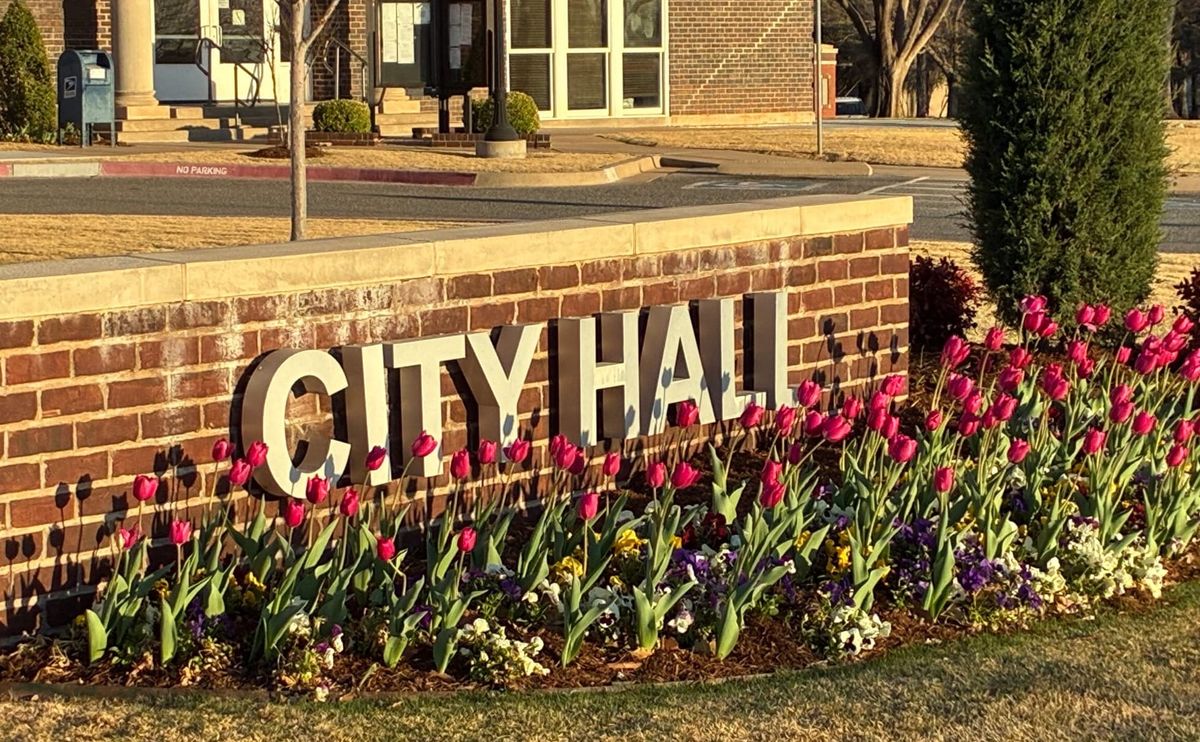
The Lawton community is being led by Brenda Spencer-Ragland, who oversees C. Carter Crane, to find a solution for those residing in the tent city. They now have less than 60 days to come up with a solution before the city council shuts down the property. This follows the Lawton Unhoused Trust Authority’s (LUTA) recommendation to the council to evacuate the property and remove it from the exceptions of the anti-camping ordinance. However, this recommendation didn’t come with any alternatives.
One of the main concerns the community has had is what would happen next, as there was no proposed alternative for where the unhoused could go. This point was reiterated by Lawton Police Department’s Sgt. Matt Dimmitt. Dimmitt currently serves the Community Oriented Policing Division and told the council that while the current location of the tent city wasn’t perfect, it’s the best option Lawton has at the moment. The location has allowed Dimmitt to create relationships with the people who stay in tent city.
“The thing I would ask from each of you is to look at them as a person,” Sgt. Dimmitt told the council. “Each one of them has a story, and with those stories come individual treatment that each one of them needs.”
Dimmitt said that removing the only place LPD could direct an unhoused individual to go to would make it harder on law enforcement and the individual. It would result in them being spread out all over the city, instead of one specified area. Dimmitt said it would make it more difficult to get each of them the treatment they need. He acknowledged that the area wasn’t perfect, but there at least needed to be an alternative. Additionally, Dimmitt explained that numbers across the board have decreased. Specifically, in fires and overall service calls.
Those who spoke out argued that if the city were to remove the only exception, then it would give people experiencing chronic homelessness no legal way to find shelter, essentially rendering homelessness illegal. People also added that trying to make this kind of change with no alternative was poor leadership.
Toward the end of the discussion, Ward 8 Councilman and Mayor Pro Tem Randy Warren told the community the city could have no part to play in the solution, otherwise the plan would be a “no-starter”. Warren stated that the city’s responsibility is in public safety and not housing the homeless. Within the city council’s motion, it was clarified that whatever solution the community was to come up with would not involve the city. The plan, directed by the council, would have to fall into the city’s Kids First: Homeless Action plan, as they stated, which outlines the city’s responsibility in the problem.
According to the Kids First: Homeless Action Plan, the City of Lawton’s role is to protect public spaces and direct federal funding. Officials and the documents state that the city does not provide direct homeless services. However, the city does offer to pay for bus tickets to individuals who feel they could have a better chance of success elsewhere. City officials emphasize the importance of personal responsibility.
Dark Roast had attempted to reach out to Mayor Booker for an interview about homelessness since June 4, 2026, it wasn’t until July 2, almost an entire month later and nearly 10 follow-up emails and an attempted phone call, that we received the following from City Council Relations Liaison Julia Mantzke:
“Thank you for reaching out and for your continued interest in this topic. I did speak to the mayor about an interview. Unfortunately, the Mayor is not available for an interview at this time. However, he asked that I provide you with the attached Kids First Initiative, as it reflects his position and approach regarding this matter.”
To note, Dark Roast never specified a time to meet and left it completely up to the mayor’s discretion.
While Lawton officials have made their stance on caring for the unhoused clear by removing themselves from the solution, their statements brought up a particular point of comparison. Lawton officials often compare themselves to the City of Norman. Whether it be services provided or firefighter efficiency, Norman is often the go-to city of comparison, despite being on the highest end of the peer cities.
Because of this common pattern of comparison, Dark Roast looked into how the City of Norman handles its unhoused population. Dark Roast spoke with Norman Chief Communications Officer Tiffany Vrska* and Community Services Manager Amanda Sherf. According to Vrska, the City of Norman has recently created a new Social Services Office using opioid settlement funds. That office is comprised of two people, Sherf and Community Outreach Social Worker Kara Fritts. This department was created solely to help address homelessness, substance abuse, and other community-related challenges.
In addition to this new department, the City of Norman funds an emergency low-barrier homeless shelter. The operations are contracted out to City Care, a nonprofit organization dedicated to ending homelessness. The organization operates Norman’s current shelter and an overnight shelter in Oklahoma City. According to Vrska, their emergency shelter takes around $750,000 to operate annually. The shelter has just over 50 beds, and according to Sherf, the beds are always full.
“They are typically turning away 5-10 people most nights due to the lack of space,” Sherf said.
Because of this growing need, Norman voters approved a proposition to construct a more permanent solution to housing the unhoused. The $8,000,000 bond is funded through a slight increase in property tax revenue and would almost triple the number of people that could be sheltered (120). However, this bond will not cover operational expenses, which will also see an increase to around $930,000 a year paid by the general fund and City Care fundraising efforts.
Sherf stated that it’s hard to determine whether the emergency shelter has decreased or increased homelessness based on the Point in Time (PIT) count required by HUD, as the numbers can generally be unreliable, adding that there are several factors that affect the number. With that said, Norman’s PIT count for 2026 was 165, which was 50 fewer than 2025 (216).
Even with the skewed numbers and having to turn people away from the shelter, Sherf expressed that it has done a lot of good in addressing the homeless population. It also has served as a first point of contact when it comes to services, similar to how the tent city acted in correlation with the Salvation Army.
“The shelter has done an amazing job of connecting guests to resources to help them obtain housing,” Sherf added.
The City of Norman also offers a mileage reimbursement program, which provides reimbursement to organizations that provide transit services to the unhoused attending programs. Even though Norman funds an overnight low-barrier shelter and does other work to assist those helping the unhoused, they maintain a similar stance to Lawton.
“As a municipality, we prioritize the health, safety, and welfare of everyone in our city,” Vrska explained. “At this point we’re responding.”
It is important to note that Norman’s passing of this bond didn’t come without opposition. In fact, a similar bond was presented, according to officials, back in around 2020, but it failed by a slight margin. In comparison, this most recent proposition passed by a slight margin with around 54% of voters for it.
After brief research, Dark Roast also looked into what the other five peer cities were doing to address homelessness, specifically, whether they were operating an overnight shelter. Those peer cities include Moore, Enid, Broken Arrow, Midwest City, and Edmond. These were selected because they were the peer cities used in Lawton’s most recent Fiscal Year budget.
Based on information none of the other municipalities use funding from the city to operate an overnight, low-barrier shelter. With that said, there are other community and nonprofit resources available, along with other methods of assistance that the individual cities provide those who are at-risk of homelessness. However, if the City of Lawton were to do something similar to what Norman does and place the question on the ballot, it would then be in the hands of the voters of Lawton.
While Mayor Booker denied doing an interview with Dark Roast, he wrote an opinion piece that was published with the Southwest Ledger. In that article, Booker stated that Lawton will not repeat the mistake of “spending multiple millions annually on these efforts” to watch their unhoused population grow. Additionally, Booker states that the money to support homeless efforts “does not exist”, adding that it would have to be taken away from another service the city provides.
Since the council gave the 60-day timeline to come up with a solution, the Salvation Army hosted a meeting where organizers stated they would be stepping back from engaging with those in the tent city due to its dangerous nature. Captain Bryan Brinlee, who is over the Salvation Army and originally started the Engage Community, said that they would continue providing assistance through their day center. More meetings are being planned, to include one being held on July 9 at 9 a.m. at Cameron University.
With the solution for those residing in tent city falling in the hands of the community and the City of Lawton setting defined roles and responsibilities, removing themselves from the equation, the future of Lawton’s chronically homeless will become more apparent in the coming months. If Lawton wanted to be more like Norman in this aspect, it could look like clarifying the city’s role based on a vote of its citizens. For those wishing for more assistance from the city, ask what that would look like, or what services/programs are you willing to trade. Unless city officials change their stance or work to amend its anticamping ordinance, the clock is ticking on whether the community can keep chronic homelessness from being illegal.
*A previous version of this article listed Tiffany Vrska’s title as Public Information Officer. This is incorrect as Vrska’s title is Chief Communications Officer.