USAO faculty push back against President's proposed changes and a lack of communication
Faculty at the University of Science and Arts of Oklahoma recently held a vote of no confidence concerning current university President Hale. Hale has recently proposed several changes to the structure of teaching and classes at the school which many faculty members disapprove of.

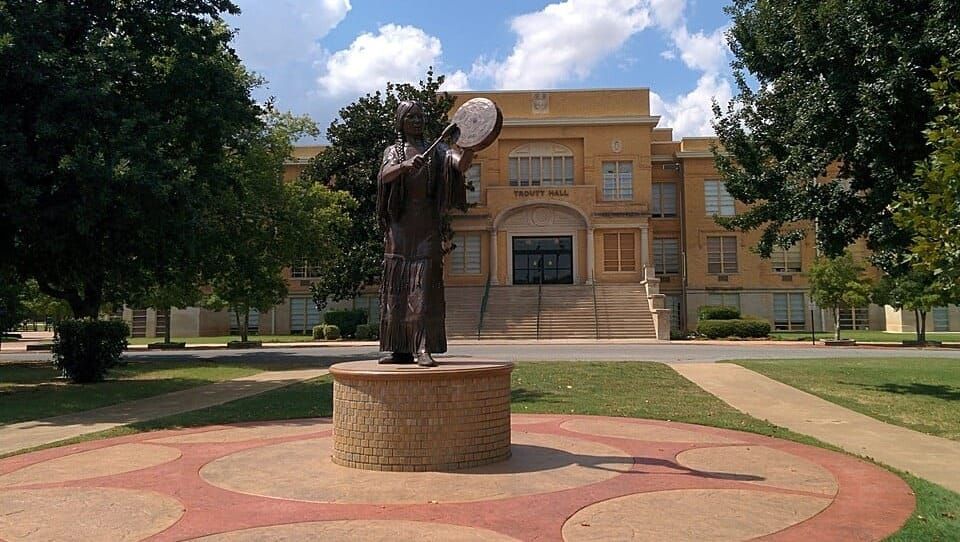
Faculty at the University of Science and Arts of Oklahoma (USAO) recently held a vote of no confidence concerning the current university President, Kayla Hale, PhD. who assumed her position in 2023. Hale has recently proposed several changes to the structure of teaching and classes at the school which many faculty members disapprove of.
According to a poster that followed the vote of no confidence, the proposed changes include:
- prioritizing programs (and faculty) that meet state guidelines for "workplace needs"
- Penalties to faculty salary for teaching classes with fewer than 10 students enrolled
- Removing the faculty, the Faculty Curriculum Committee and Handbook Committee as mandatory faculty-driven aspects of shared governance
- Strict policies about how lab and studio teaching qualify as workload
- Replacing tenure with one-year contracts for full-time faculty
- To have a majority of instruction by part-time, possibly remote, adjunct professors
Faculty push back
Jacquelyn Knapp, USAO Art Department Coordinator and Faculty Association Vice President, along with Jeannette Loutsch, PhD. who is a Professor of Science and the President of the Faculty Association, say some of these changes have already began to be made, even before the changes have been presented to the board of regents. They stated that they were made aware of the changes just one week before the Fall semester began, which is what led to the vote of no confidence.
"We're doing what we're supposed to, and we all agree that we need to meet mandates and all that stuff but we need to do this as a group, not as a single entity dictating what needs to be done," Loutsch said.
The vote resulted in 40 faculty members voting in favor of the no confidence ruling. Only one faculty member voted against it, and four abstained. While a vote of no confidence doesn't have any direct power to change things, it does reflect the volume of disapproval faculty feel about the proposed changes. Knapp and Loutsch believe the overwhelming response of the vote also foreshadows what the outcome will be if the changes are approved.
"There's nothing we do that isn't ultimately approved by administration, but it seems to me they are not wanting faculty to be involved in any of the shared governance that we're actually required to have for accreditation," Knapp said.
Knapp has taught at the university for 32 years and is even an alumni, while Loutsch has been there for 19 years. In their time, they've seen many changes take place but never to the degree of what's being proposed now. Knapp sad there have been disagreements between faculty and administration before that involved a lot of back and forth but not anything of this scale.
The two professors claim that already, the changes have proven to pose a threat to the very essence that makes the university unique among other schools in the state. Knapp mentioned that faculty have already been removed from advising responsibilities which she said worries her about the quality of help students will receive as external advisors are brought in. She added that professors know the programs and students well enough to know what each individual needs, and that attention to detail will now likely change.
"Personal advising has been the bread and butter of this university. That's something we can provide that other universities cannot and they're trying to take that away," Knapp said.
A lack of communication between faculty and administration
Knapp and Loutsch also voiced their concerns over how little communication has taken place between faculty and administration about the matter. Loutsch said she knew there was reason for concern when the topic of changes was treated discreetly. They said there's never been an instance before where faculty voices weren't given some platform to be heard about issues that affected them. Knapp said in the beginning, the dean of school even tried to bring her to one of the administrative meetings but was told not to.
"The bottom line is there's no communication between faculty and administration," Knapp said. "Matter of fact, when the deans were told about this, they were told not to share it with faculty."
Student and alumni concerns
Faculty aren't the only ones making their concerns heard about the changes either. Already, students and alumni have begun talking and taking to social platforms to express their concerns and frustrations. Rylan Nelson, who graduated from USAO in 2023 with a degree in Theatre Arts, said his disappointed that such changes are being considered because he believes the faculty are the greatest asset of the school.
Nelson said he attended both Rose State college and Oklahoma University before he found USAO. He explained that between not feeling like there were enough opportunities to feeling like he was just a number, his experience at these schools left him feeling like he wasn't cut out for college. He said that not long after that, he was convinced to look into USAO. When he did, he was blown away by the quality of staff and personal size of the school.
"I just ended up falling in love with it. The school has a really strong community. The professors just genuinely seemed to care about the students and were offering their time consistently outside of class hours, volunteering and participating in extracurricular events. It was a magical place," Nelson said.
Nelson said the students he still knows on campus have mentioned their fears about losing the intimate feel they currently offer and eroding in quality. He added that for a while when he was teaching, he would encourage some students to look into USAO for college but feels like if these changes are implemented, he won't be able to do that in good faith.
In addition, he's concerned about the way faculty are being treated when they are what appeals to prospective students looking into the school. He noted that idea of them facing pay cuts or being replaced by adjunct faculty seems to defy the purpose of the school. He said that many of the opportunities that were available to him as a student were due to professor involvement and he's worried future students won't get that experience because adjunct professors wouldn't have the time or experience to offer.
"As an alum, I am someone who hopes to tie myself to the future of the university, I'm someone who's going to be looking to donate when I'm an established professional – someone who would love to go back and attend events at the university," Nelson said. "The changes that are happening now makes me worry that the things I looked forward to coming back and being involved in at USAO might end up being a thing of the past."
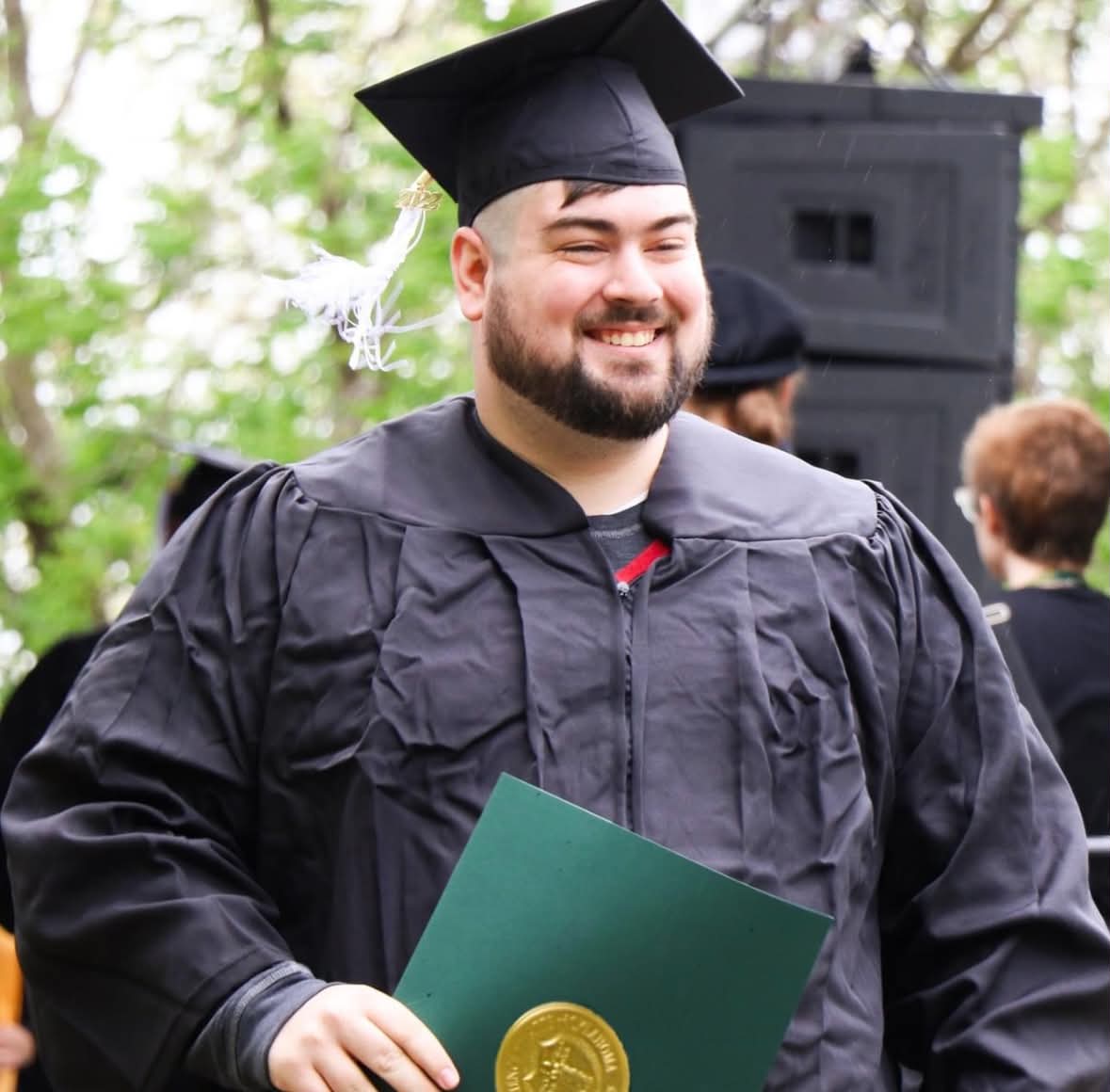
Nelson also mentioned that he was aware of one professor that taught in a niche focus with small classes that had already been pressured out of the school. He argued that most students he knows prefer the small classes because they provide more thorough learning experiences that leave students feeling prepared to work in their fields, so he can't imagine professors being punished for that.
Nelson said that Hale became president just after he left so he was aware of some of the issues she was taking over. He acknowledged that the university was still struggling to find its footing after the COVID pandemic so there was certainly a push for more online classes and some budget concerns that she would have to manage.
"The issue is that with all of these problems that certainly existed back in twenty twenty one and twenty two, no meaningful action has been taken that addresses them. In fact, the actions that have been taken now are a step in the wrong direction," Nelson said.
The alumni also acknowledged that he feels there are some pressures from higher powers pushing for the changes. He referenced other states with similar changes in higher education like Florida. He said the changes are presented as being "economically motivated" but commonly result in students in arts and diversity programs paying the price.
Knapp echoed Nelson's concerns, claiming that she believes many of the decisions being made are politically motivated. She said the she knows the university received a letter from the Attorney General's office but doesn't know what it said, due to the lack of communication taking place.
The impact of such changes
Knapp and Loutsch siad they're worried about how the progress the university has seen over the last few years the appears to be getting overlooked will be affected for the sake of an agenda. Loutsch said she's been trying for decades to grow her program and just as progress is being made, these changes are being discussed which would drastically alter the learning environment that's been carefully crafted. Loutsch said the environment is a place where all students can feel accepted for who they are, which she believes students deserve when they're paying for school. She said it's hard not to care about the well being of students at such a small school, but is unsure how that will be altered if these changes take place.
"For all of us, it's mostly about the students. Obviously, we're not happy about them cutting our salaries or making us teach another class because there's less than ten students in one, but really it's a concern for our kids. We want them to have what they came here for," Loutsch said.
Knapp shared that enrollment has gone up in the last few years because faculty has been more involved in the process, but now they may not be a possibility moving forward. For the same reason, she's concerned about the curriculum transitioning to online courses. While she understands that it makes those classes more accessible to a broad span of people, she fears it will also have a negative impact on the economy of Chickasha. Further, She worries that students won't be drawn to the online courses the way they're currently drawn to USAO for the personal experience it offers.
At this point, both faculty members are unsure what their future looks like. They are both near retirement and had planned on sticking around a while longer, but if these changes are implemented, they're not sure it would be worth it. In fact, Knapp said if these changes go through, she expects to see a "huge exodus of faculty and students."
Dark Roast Report reached out to President Hale multiple times for a comment. Her office simply stated that she was "not publicly commenting on anything just yet."

Board of Regents meeting will determine the outcome
The vote of no confidence results were sent to the Board of Regents, now all faculty can do is wait to hear the response. The board of regents meeting being held at 1 p.m. on September 10 will determine whether these changes are approved and will determine what the fate of USAO looks like for faculty and students alike. Nelson said he hopes that when it comes time for a decision to be made, the board considers the students.
"I hope someone takes note that the students and the alumni do care and do have opinions about the direction of the college. We're saying what matters to us – why we went there in the first place. If truly the thing that matters is enrollment numbers, then I hope someone pays attention to why we enrolled there in the first place," Nelson said.
Knapp and Loutsch hope that the overwhelming response of the Vote of no confidence will have an impact on the decision that's made. Knapp encourages members of campus and residents of the greater community to make their voices heard. They suggest people that are concerned about the proposed changes to reach out to the Board of Regents. Lastly, Loutsch urges people to get out and vote. She said regardless of party, people should vote for the candidate that best represents their ideals because that's how real change in such matters is made.